

I spend a ridiculous amount of time thinking about coffee. Not the fancy pour-over technique or which single-origin bean to order this month. I mean the daily ritual. The mug I reach for before my brain's fully booted up. The thing that makes mornings bearable.
For years, the sweetener was the weak link. Sugar, then the crash. Artificial sweeteners that tasted like a chemistry experiment. Stevia, with that licorice aftertaste that hangs around for twenty minutes. None of it worked in coffee — until I found monk fruit sweetener.
If you're a coffee drinker trying to cut sugar, this is the post I wish I'd read before cycling through a dozen failed alternatives.
What Makes Monk Fruit Sweetener Different in Coffee
Most sugar substitutes are designed for baking or general use. They work fine in a muffin. In coffee, every flaw gets amplified. The heat. The acidity. The way your taste buds are exposed first thing in the morning.
Monk fruit sweetener doesn't have that problem. The mogrosides — the natural compounds that make it sweet — are clean and neutral. No bitter finish. No chemical aftertaste. It dissolves in hot coffee the way sugar does, without that grainy residue some alternatives leave behind.
Here's the thing nobody tells you: monk fruit sweetener doesn't try to trick your brain into thinking something is sweet. It just is. The same way sugar is, minus the calories and the blood sugar spike.
Why Your Current Sweetener Is Letting You Down
Let me be blunt about what's in your average coffee shop basket:
Sugar. Tastes great, but it spikes your glucose and leaves you crashing by 10 AM. If you're having two or three coffees a day, that's a lot of empty calories your body didn't sign up for.
Aspartame or sucralose. Zero calories, but they're not doing you any favors either. Your gut microbiome isn't a fan, and for some people the taste is flat-out unpleasant in hot coffee. Ever noticed how diet soda drinkers don't usually drink black coffee with Splenda? There's a reason.
Stevia. The closest competitor to monk fruit, and for many people it works fine. But the aftertaste is real. Some folks don't notice it at all. Others describe it as licking a mailbox — actual quote from a friend. If you're in the second camp, monk fruit sweetener is what you've been looking for.
Erythritol. This is the sugar alcohol that's in most monk fruit blends — ironic, since it's not monk fruit at all. It can cause bloating and digestive issues, especially if you're having multiple cups. Pure monk fruit avoids this entirely.
How to Switch Without Wasting Your Morning Coffee
The transition isn't seamless if you're used to sugar. Here's what I learned:
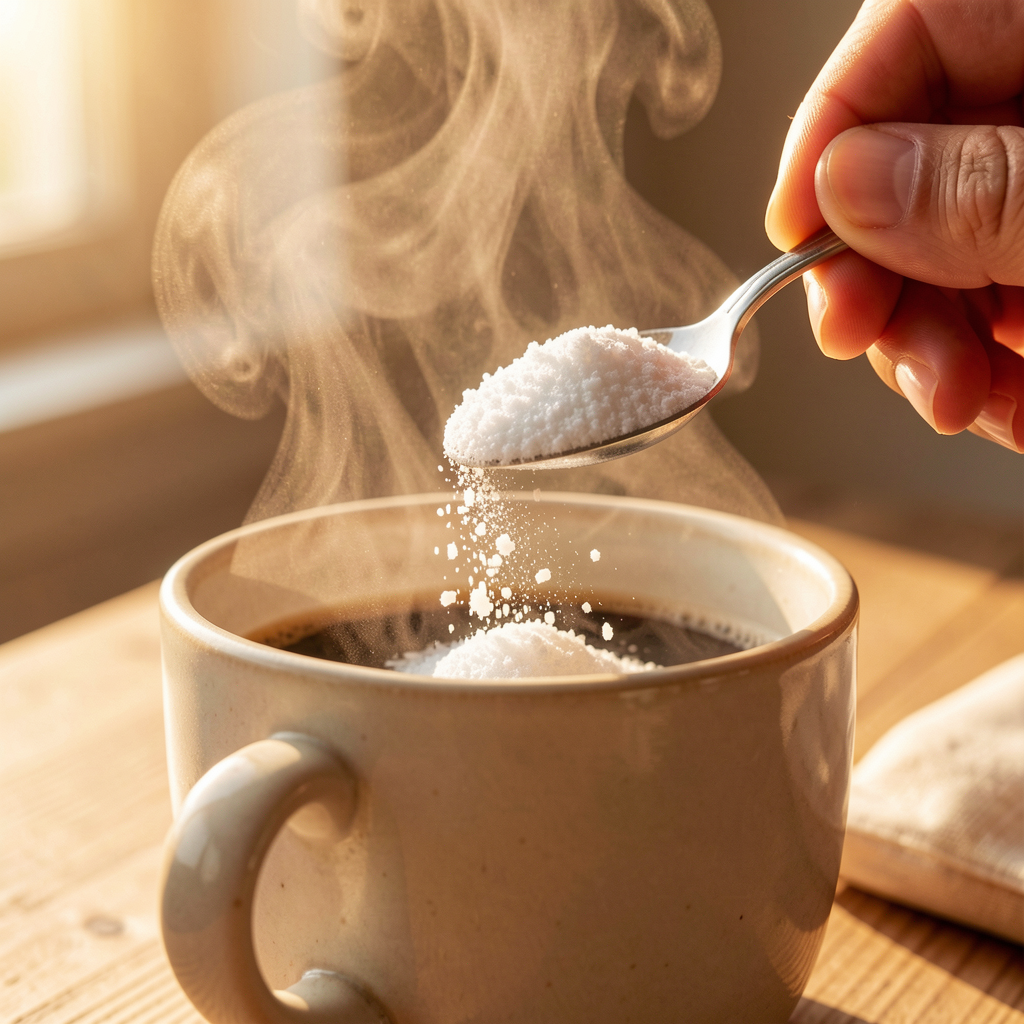
Monk fruit sweetener dissolves cleanly in hot coffee — no grainy residue.
Start with half the amount you'd use for sugar. Monk fruit extract is more concentrated. Half a teaspoon of a good monk fruit sweetener equals roughly a teaspoon of sugar in sweetness. Taste, adjust, find your ratio.
Use liquid extract for iced coffee. Powder can clump in cold liquid. A few drops stirred in before the ice dissolves perfectly. If all you have is powder, stir it into a splash of hot water first, then pour over ice.
Give your palate a week. If you've been drinking sweetened coffee for years, your brain expects a certain flavor profile. The first few cups with monk fruit might taste slightly different. By day five, your old sugary coffee will taste weirdly syrupy. It happens every time.
What to Look for on the Label
This is the part that tripped me up, and I don't want you to make the same mistake.
Most products sold as "monk fruit sweetener" are actually a blend of monk fruit extract and erythritol. The monk fruit is maybe 1% of the bag. The other 99% is a sugar alcohol that can upset your stomach.
If you want the real experience — clean sweetness, no digestive drama — look for a product that lists monk fruit extract as the only ingredient, or monk fruit plus a gentle carrier like tapioca fiber or inulin. That's what SweetMonkFruit does with our pure monk fruit sweetener. Two ingredients. You can read both of them without a chemistry degree.

Your morning coffee deserves a sweetener that holds up its end of the deal.
The Bottom Line
Your morning coffee isn't the place to compromise. You've already gone through the effort of choosing better beans, maybe even grinding them yourself. The sweetener should hold up its end of the deal.
Monk fruit sweetener does. It tastes clean, dissolves fast, and doesn't mess with your blood sugar or your digestion. If you're still sweetening your coffee with something that leaves you feeling off by noon, give it a try. Your mornings will thank you.

